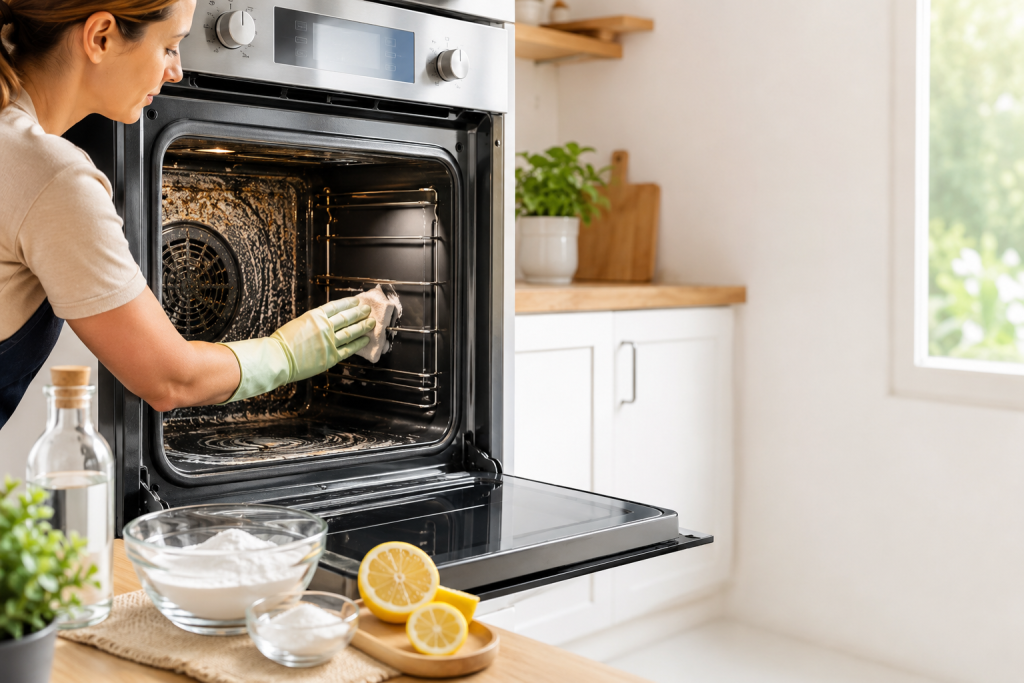
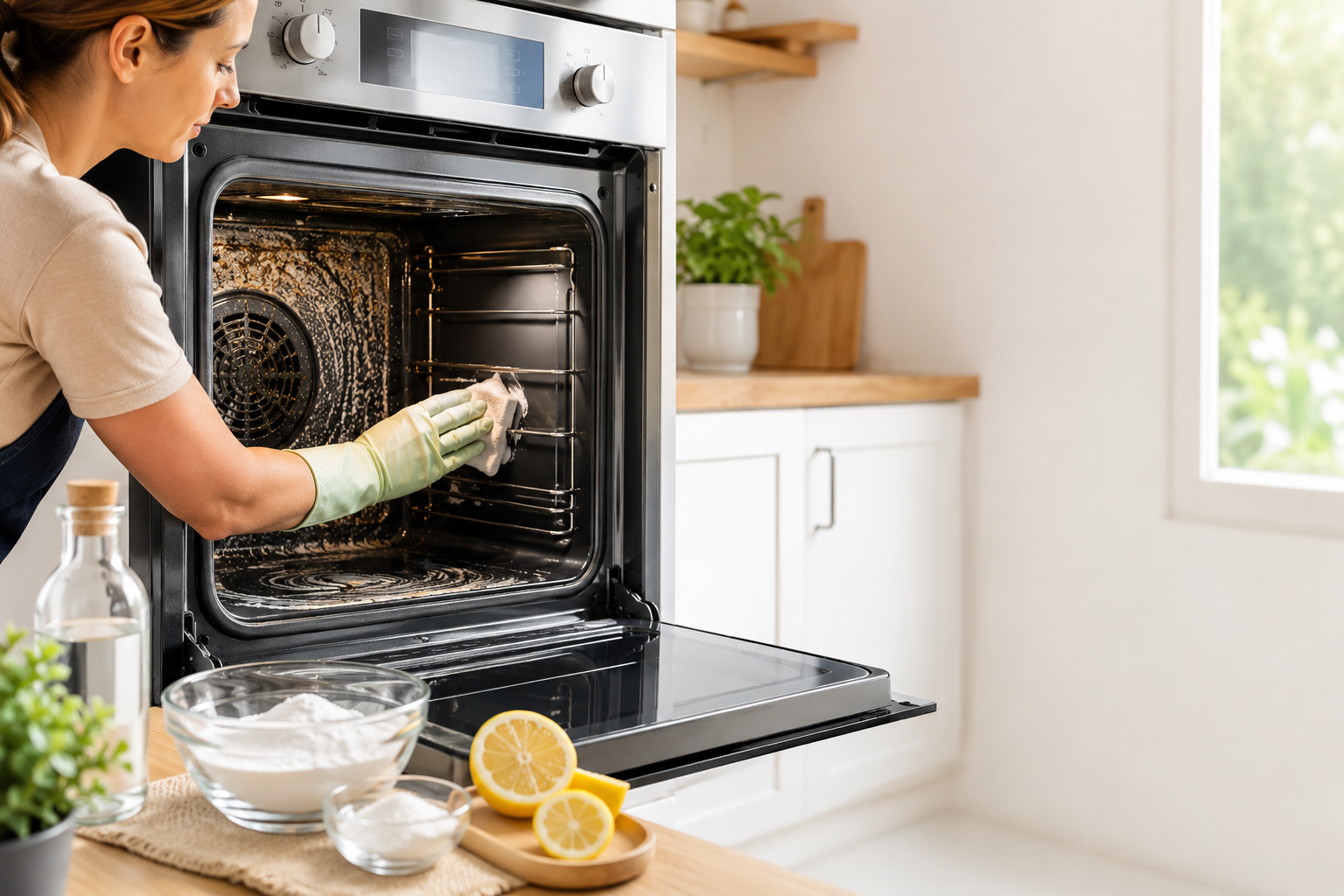
Learning how to clean an oven without harsh chemicals is easier than most people think. Commercial oven cleaners often contain sodium hydroxide, also known as lye, which can cause skin burns, release fumes that irritate the lungs, and leave residue inside the appliance that food later sits in.
The good news is that baking soda, white vinegar, lemon, and salt can strip away baked on grease and burnt food just as effectively, with none of the risks. This guide walks through exactly how to clean an oven naturally, what tools to use, and how often to do it to keep your oven working at its best.
A clean oven cooks food more evenly, uses less energy, and reduces the risk of smoke and unpleasant odours during cooking. Whether your oven has a light layer of grease or years of baked on buildup, the natural methods below will restore it without a single toxic chemical.
If you would rather skip the job entirely, our residential cleaning team handles everything from ovens to full kitchen deep cleans as part of our regular housekeeping service.
Why You Should Avoid Chemical Oven Cleaners
Before diving into how to clean an oven naturally, it helps to understand why so many people are switching away from chemical cleaners. The main ingredient in most aerosol oven cleaners is sodium hydroxide, a highly alkaline compound that dissolves grease by chemically breaking it down. The same reaction also breaks down skin, eye tissue, and lung lining if exposed.
Beyond the safety concerns, chemical cleaners leave behind residue that can burn off during your next bake and contaminate food. They also produce strong fumes that linger inside small kitchens for hours.
| Risk Factor | Chemical Cleaner | Natural Method |
| Skin burns | High risk | No risk |
| Fume inhalation | Moderate to high | None |
| Food contamination | Possible if not rinsed | None |
| Cost per clean | $8 to $15 | Under $2 |
| Environmental impact | Contains caustic chemicals | Fully biodegradable |
| Safe with kids and pets | No | Yes |
Natural cleaners cost a fraction of commercial products, use ingredients you already have in the pantry, and work just as well when given enough time to break down grease.
What You Need to Clean an Oven Naturally
Gather these basic supplies before starting. Most are already in your kitchen.
Baking soda, white vinegar, a spray bottle, a damp cloth or sponge, a silicone or plastic scraper, rubber gloves, a small bowl, water, and optionally a lemon and coarse salt for extra scrubbing power. Avoid steel wool and metal scouring pads because they scratch the enamel lining inside the oven.
A soft toothbrush is also useful for getting into corners, around the door seal, and into the crevices near the heating element.
How to Clean an Oven With Baking Soda
Baking soda is the single most effective natural oven cleaner. Its mild alkaline properties dissolve grease without damaging enamel, and its gritty texture provides gentle scrubbing power.
Step 1: Remove the Racks
Slide out the oven racks and anything else sitting inside the oven like pizza stones or baking trays. These get cleaned separately.
Step 2: Make a Baking Soda Paste
Mix half a cup of baking soda with three to four tablespoons of water in a bowl. Stir until you get a spreadable paste. Adjust the consistency so it spreads easily without dripping.
Step 3: Coat the Interior
Wearing gloves, spread the paste across all interior surfaces of the oven. Focus on greasy areas and the bottom where spills collect. Avoid the heating elements, the fan, and the oven light. Do not worry if the paste turns brown as it sits, that is the grease breaking down.
Step 4: Let It Sit Overnight
For best results, leave the paste to work for at least 12 hours. If you are short on time, a minimum of 4 hours still delivers noticeable results, but overnight is ideal for heavy buildup.
Step 5: Wipe Away the Paste
Use a damp cloth to wipe out the paste. A silicone spatula helps lift any stubborn bits without scratching. Rinse the cloth often and keep wiping until all residue is gone.
Step 6: Spray With Vinegar
Fill a spray bottle with white vinegar and spray every interior surface. The vinegar reacts with any remaining baking soda, creating a mild foaming action that lifts residue. Wipe clean with a fresh damp cloth.
Step 7: Final Wipe Down
Wipe the oven interior once more with clean water to remove any final residue. Leave the door open for 30 minutes to air dry completely.
How to Clean Oven Racks Without Chemicals
Oven racks collect the worst of the grease and burnt food. A simple overnight soak handles even years of buildup.
Fill the bathtub or a large container with hot water. Add half a cup of dish soap and one cup of baking soda. Submerge the racks fully and leave them for at least 6 hours, or overnight. After soaking, any remaining grime wipes off with a sponge or soft brush.
For bathtub protection, lay an old towel under the racks to avoid scratching the tub surface.
| Method | Soak Time | Effectiveness |
| Dish soap and baking soda | 6 to 12 hours | Excellent for most buildup |
| Dryer sheets and warm water | 4 to 6 hours | Good for light grease |
| Vinegar and baking soda | 8 hours | Good for hard water spots |
| Aluminium foil and baking soda | 1 hour with hot water | Great for polishing metal |
If you are already running a full end of lease cleaning before moving out, oven racks are one of the first things inspectors check, so give them extra attention.
How to Clean an Oven With Vinegar and Lemon
For ovens that just need light cleaning, a simple vinegar and lemon method works without the overnight wait.
Fill an oven safe bowl halfway with water. Add half a cup of white vinegar and the juice of one lemon, plus the lemon halves themselves. Place the bowl inside the oven and heat it to 120 degrees Celsius for 30 minutes. The steam loosens grease and softens buildup.
Turn off the oven and let it cool until warm but not hot. Wipe the interior with a damp cloth. Most residue will come off easily thanks to the steam treatment. For any stubborn spots, sprinkle baking soda on the area and scrub gently with a wet sponge.
This method is perfect for regular monthly maintenance and prevents the need for heavy deep cleans later.
Save Time by Booking Professional Cleaning With Best4Ever
If your oven has years of baked on grease, or you simply do not want to spend your weekend scrubbing, Best4Ever can help. Our team includes oven cleaning as part of our full kitchen deep cleans, and we work with natural and low toxicity products wherever possible. We also offer dedicated tile and grout cleaning to restore discoloured kitchen surfaces, plus carpet cleaning and commercial cleaning for restaurants and cafes that need regular oven maintenance. Reach out through our contact page for a free quote.
How to Clean an Oven Door Glass
The inside of the oven door glass is one of the hardest spots to clean and the most satisfying to see sparkle. The trick is to use a thick baking soda paste and patience.
Make a paste with baking soda and a little water, similar to the interior method. Spread it across the glass evenly, covering every burnt on mark. Let it sit for 30 to 45 minutes. Wipe off with a damp microfibre cloth, then buff dry with a clean cloth.
For heavy buildup between the glass panels, you may need to remove the door entirely by lifting it off its hinges. Check your oven manual for the correct procedure. A long flexible tool wrapped in a cloth can reach between panels if separation is not possible.
How to Clean a Self Cleaning Oven Without Using the Self Clean Function
Self cleaning cycles reach temperatures of around 480 degrees Celsius, which burns food residue into ash. The problem is that these cycles stress the oven’s electronic components, can trigger smoke alarms, and use significant energy. Many appliance repair specialists recommend avoiding the self clean cycle because it is a common cause of thermostat and control board failures.
You can clean a self cleaning oven manually using the exact same baking soda and vinegar method described above. Just follow the standard steps and avoid spraying liquid on any electronic components or the door gasket. Many modern ovens have a steam clean function, which uses a much lower temperature and water rather than extreme heat. This option is far gentler on the appliance and handles light buildup effectively.
How to Clean Different Types of Oven Stains
Not all oven grime is the same. Here is how to tackle specific problems.
| Type of Stain | Best Natural Solution | Extra Tip |
| Burnt on grease | Baking soda paste overnight | Scrape with silicone tool after soaking |
| Spilled sugar | Salt while oven is still warm | Salt absorbs the sugar for easier removal |
| Burnt food bits | Baking soda and vinegar spray | Let foam sit for 20 minutes |
| Smoke residue | Vinegar and water steam | Run empty oven at low temp with lemon water |
| Rust on racks | Lemon juice and salt scrub | Dry thoroughly to prevent return |
| Grease on door seal | Damp microfibre with vinegar | Avoid soaking the rubber seal |
Fresh spills are always easier to clean than old ones. Sprinkling salt on a hot spill immediately absorbs liquid and makes removal much easier once the oven cools.
How Often Should You Clean Your Oven
Oven cleaning frequency depends on how often you cook and what you cook. Here is a realistic schedule.
| Usage Pattern | Recommended Frequency |
| Daily cooking | Deep clean every 3 months |
| 3 to 5 times per week | Deep clean every 4 to 6 months |
| Occasional use | Deep clean every 6 to 12 months |
| Heavy roasting or baking | Monthly light cleans |
| Commercial kitchens | Weekly or daily depending on volume |
| After any major spill | Immediately |
Between deep cleans, wipe up spills as soon as the oven cools. A quick clean takes 30 seconds when the mess is fresh and grows into a 3 hour job when left for months.
Mistakes to Avoid When Cleaning Your Oven
Some common habits can damage your oven or create safety issues. Skip these.
Do not spray water or cleaner directly onto heating elements, fans, or the oven light. Electrical components are not designed to get wet.
Do not use steel wool, wire brushes, or metal scrapers. They scratch the enamel lining, which then traps more grease and rusts over time.
Do not mix vinegar with bleach. The reaction creates toxic chlorine gas.
Do not clean a hot oven. Let it cool completely before applying any solution. Hot surfaces cause cleaners to evaporate too fast and can burn your hands.
Do not ignore the oven seal. A grimy door gasket lets heat escape, increases cooking times, and wastes energy.
Frequently Asked Questions
What is the best natural cleaner for an oven? Baking soda paste is the most effective natural oven cleaner. Left overnight, it breaks down even heavy grease. Pair it with a vinegar spray for a final residue free finish.
How long does it take to clean an oven naturally? Active cleaning time is about 30 minutes, but the baking soda paste needs at least 4 to 12 hours to work. Plan to apply the paste the night before and wipe it clean the next morning.
Can I use lemon to clean my oven? Yes. Lemon juice is mildly acidic and helps dissolve grease and deodorise the oven. The steam method with lemon and water is great for light monthly maintenance.
Is it safe to clean an oven while it is warm? A slightly warm oven helps cleaners penetrate better, but a hot oven is dangerous and causes cleaners to evaporate before working. Let it cool to room temperature or barely warm before applying any solution.
Can I use the self clean function on my oven? You can, but it puts significant stress on the appliance. Manual cleaning with baking soda is gentler on the oven and lasts longer. Check your manual for specific guidance.
How do I clean burnt food from the bottom of the oven? Cover the area with baking soda paste and let it sit overnight. In the morning, the burnt food lifts off easily with a damp cloth or silicone scraper.
Will vinegar damage my oven? No, vinegar is safe for oven interiors and rinses clean without residue. Just avoid spraying it directly on heating elements or electronic components.
How do I clean between the glass panels of the oven door? You may need to remove the door by lifting it off its hinges. A flat tool wrapped in a microfibre cloth can slide between the panels to wipe out dust and grease. Consult the manufacturer’s manual first.
What is the best way to clean oven racks? Soak them overnight in hot water with half a cup of dish soap and one cup of baking soda. Remaining grime wipes off easily the next morning.
Does vinegar and baking soda really work on ovens? Yes. The combination is highly effective because baking soda breaks down grease and vinegar dissolves mineral residue. Together they handle most oven cleaning challenges without any chemicals.
Keeping your oven clean does not need dangerous chemicals, expensive products, or hours of scrubbing. A simple baking soda paste, a little patience, and regular maintenance deliver results that match or beat any commercial cleaner. Try these methods once and you will never go back to aerosol oven cleaners again.